
The Impact of AI on Consumer Experiences

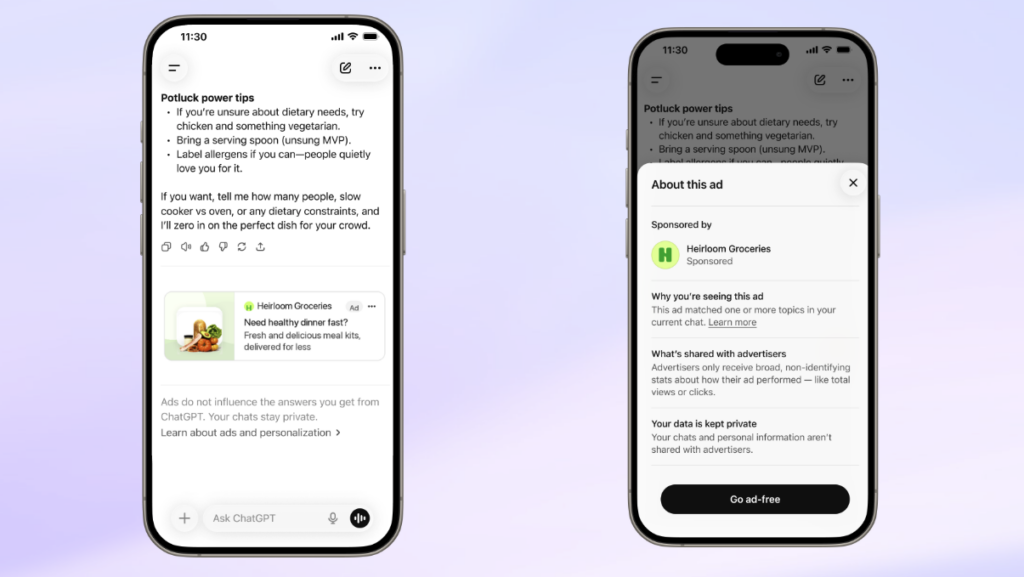
ChatGPT ads are sponsored cards that appear below ChatGPT’s response. Each card includes a title, a short description, an image, and a link. OpenAI clearly labels the card as sponsored and visually separates it from the response.
Eén ding is belangrijk. Adverteerders beïnvloeden de inhoud van het antwoord niet. Betalen voor een aanbeveling in de tekst zelf is onmogelijk. Advertentie en antwoord blijven strikt gescheiden, net zoals dat bij SEO en zoekmachine adverteren (SEA) het geval is.
OpenAI is launching ChatGPT ads in 31 European countries, including the Netherlands. Only users of the free Free plan and the low-cost Go plan will see the ads. The Plus, Pro, Business, Enterprise, and Education plans will remain ad-free.
That determines your reach. You’ll reach the large group of free users, not the paying users. For most markets, that’s still a massive audience. Worldwide, the vast majority of ChatGPT users use the free version.
Targeting works differently here than in Google Ads. ChatGPT looks at the topic of the current conversation. Demographic factors and device type also play a role.
Keywords and detailed user profiles do not play a role initially.
In Europe, OpenAI does not initially personalize ads based on previous chats or ChatGPT’s memory. European privacy laws drive that decision. What remains is contextual targeting, which aligns well with how people use AI.
That’s a big difference. Someone who asks which solution is best describes their situation in their own words. That intent is more specific than a search query in a search engine like Google or Bing. Read our analysis on the impact of AI on consumer experiences.
You purchase ad space on a cost-per-thousand-impressions (CPM) or cost-per-click (CPC) basis. For CPC campaigns, OpenAI recommends a starting bid between $3 and $5. The final price is determined by an auction, just like the bidding process in Google Ads.
Plan on a media budget of at least 1,000 euros per month. With a smaller budget, you won’t collect enough data to draw a reliable conclusion. Also, define a learning objective in writing beforehand, so that after the initial period, you’ll know what you’re aiming for.
The tracking side also requires attention. OpenAI offers its own pixel and a conversion API. These allow you to link a click to an inquiry, a purchase, or revenue. For now, the reports remain more limited than those from Google and Meta.
Yes, but not independently. In Europe, ad buying is currently handled through OpenAI’s Ads Solutions team, agencies, and technology partners. Self-service via Ads Manager will follow later. In the United States and the United Kingdom, advertisers can already create their own accounts.
For Dutch companies, this means one thing above all else: the auctions are still quiet right now. Those who test the platform in the first few months will pay less than those who join a year from now.
Betaalde en organische zichtbaarheid in AI staan los van elkaar, maar horen wel bij elkaar. Met Generative Engine Optimization (GEO) zorg je dat AI-modellen jouw bedrijf noemen in het antwoord zelf. Met ChatGPT Advertising koop je zichtbaarheid onder dat antwoord.
It’s a powerful combination. If you appear in the answer and in the ad below it, you’ll dominate the entire screen. In our blog post about the impact of AI on online marketing, you can read about how that organic aspect works.
Four steps to get you ready for when you’re ready to go live:
You can read more background information about the rollout in OpenAI’s official statement.
ChatGPT ads are a new channel, with all the uncertainty that comes with it. That’s exactly why now is the time to test the waters rather than wait and see. We’ll handle access, set up tracking, and work with you to determine where you want to be visible.
Curious about how your business is currently performing in AI search results? Take the free GEO scan or contact us to discuss ChatGPT ads.
ChatGPT ads are sponsored ad cards that appear below ChatGPT’s response, featuring a title, short text, image, and link. OpenAI clearly labels them as sponsored.
Starting August 24, 2026, some Dutch users will see ads in ChatGPT. This will happen simultaneously in 31 European countries.
No. The advertising system is separate from the model that generates the responses. It’s impossible to pay for a recommendation.
You bid per thousand impressions or per click. OpenAI recommends a starting bid of between $3 and $5 per click. The auction determines the final price.
Yes, through OpenAI’s Ads Solutions team, through agencies, or through technology partners. Self-service via Ads Manager will be available later.

Written by: Martijn Stap
Martijn is Business Developer at OMA. This timing expert will gladly provide you with practical advice or an appropriate proposal. Right on time. Usually even a little too early.