
B2B Email Marketing: The Forgotten Channel


The subject line is one of the most important parts of your email campaign. The average open rate is between 20% and 40%, depending on the industry and the type of email you send. An e-commerce company that emails offers and product tips several times a week typically scores lower than a coaching company that shares valuable insights monthly. Still, in both cases, it's still important to target a higher open rate.
Even a small difference in opening rate can have a big impact. Let's say you have a database of 10,000 contacts. The average open rate is 30% and your click-to-open rate (CTOR) is 5%. That results in an average of 150 interested visitors per email campaign. With a conversion rate of 5% and an average order value of €50, that amounts to €375 revenue per mailing.
If you increase the open rate to 35% - for example, by simply adding an emoji to the title - then sales increase to €437.50. That small change alone earns you an additional €62.50 per email.
There are many best practices for writing strong email titles. General rules remain important: keep it short, be clear and arouse curiosity. Use strong words, numbers or a clear promise. Avoid clickbait and make sure the content of the email always matches what you promise in the title. Make it personal if you can, for example by using the recipient's first name or a relevant interest.
However, the success of a subject line also depends heavily on your target audience. For example, the word “newsletter” in the subject line often results in a low open rate. Yet, for an engaged audience that knows you share valuable information every month, it can actually lead to a high open rate. The same applies to the use of emojis. In many cases, this grabs attention and increases the open rate, but with a business audience, an emoji can come across as unprofessional. So know your audience and tailor your subject line accordingly.
How do you know which title works best for your target audience? The only way to find out is to A/B test every single mailing. This provides valuable insights that you can use to further optimize your email campaigns.
Just make sure that the difference between the two titles is clear enough to learn something from. It doesn't have to be a big difference, as long as it's based on a clear hypothesis. A good example:
📨 The best email titles versus The best email titles 📨. The expectation here is that the first variant will be opened more often because the emoji at the beginning immediately stands out in the inbox.
For example, a less useful test is: The Best Email Titles versus The Best Email Subject Lines. While there is a difference, you learn little from this. Is it about the length? The choice of words? The tone? Without a clear hypothesis, you can't draw targeted conclusions from the results. Therefore, always test on one specific element at a time.
In addition to the subject line, the preheader is an important part of your email. This is the short sentence displayed in the inbox next to or below the title. Think of it as an addition to your subject line, not a repetition of it. The preheader provides additional context and can provide just the push to get someone to open it.
Be aware that the preheader is not always easily visible. On desktop email programs, it is usually displayed, but on mobile it often drops out or is shortened. Moreover, the display differs from one email provider to another. Therefore, always make sure the most important information is in the title. The preheader reinforces the title, but the title should be convincing even without the preheader.
A strong example is:
Title: Learn how to write the best email titles
Preheader: Read our latest blog full of tips.
Here, the preheader makes it clear that this is a blog article, while the title highlights the content.
Less strong is:
Title: Read our latest blog full of tips
Preheader: Learn how to write the best email titles.
Without the preheader, it remains unclear what the blog is about and less likely to engage the reader. So think carefully about the combination of both lines.
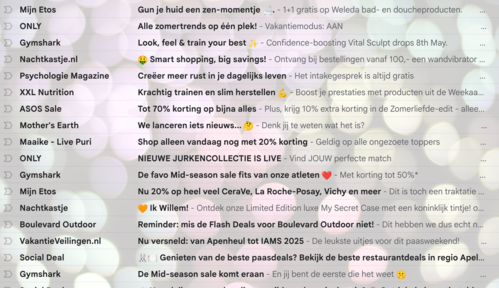
At Lassie, we regularly test different variations of email titles to gain insight into the click and opening behavior of our readers. One example is the use of the first name in the subject line. In an A/B test, we saw that the version with first name performed better than the general variant:
We also tested the effect of emoji placement. It turned out that the position of the smiley had an impact on the result:
For our own campaigns at OMA, we also tested what the difference is between titles with and without emoji. An example:
These tests show how small changes in subject lines can have a noticeable effect on the results of your mailings.
After reading this blog, did you get excited about getting started with A/B testing your email titles yourself? Then there is one more important note. Good titles work because they stand out and grab attention. When you discover that using a first name in the subject line, for example, scores well with your target audience, it is tempting to apply this by default.
Still, it's smart to keep varying. What stands out now may actually be less effective over time if it becomes predictable. So alternate well-performing titles with other proven best practices. That way you keep your emails relevant and appealing to your readers.

Written by: Daniël Kuipers
Daniel is the founder of Online Marketing Agency. He constantly scours the Internet for the latest gadgets and tactics and blogs about them in understandable language. Well, sometimes.